I want recovery commitments built around verified conditions, workable zones and an honest account of every trade’s readiness. Urgency needs a plan that protects the finished result.
The project is three months behind schedule. The completion date has barely moved. Then the call comes: “We need the millworker here Monday.” The building still has unresolved conditions. Everyone wants progress. But bringing finished millwork into an unready building can create another problem for an already struggling project.
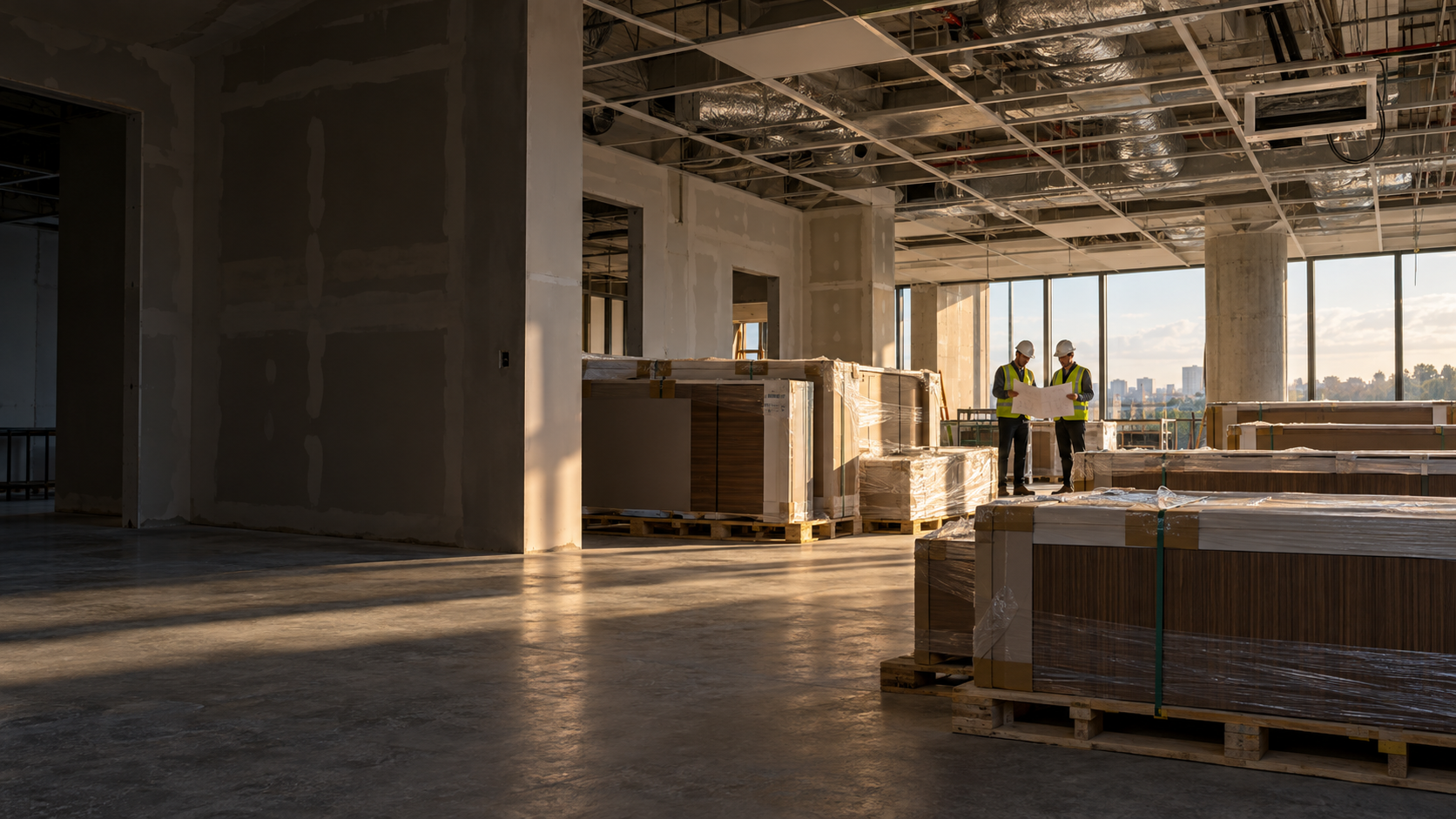
AI-generated editorial illustrations depict hypothetical site conditions and readiness inspection; they are not photographs of an actual COREFINISH project.
The delay reaches the finish trades.
Time may have been lost during permitting, enclosure, inspections, mechanical work, design decisions, or procurement. The reasons deserve a factual review.
By the time millwork installation approaches, however, the remaining schedule may assume that several trades can occupy the same rooms, finish immediately, and encounter no conflicts.
The millworker is asked to add crews, split deliveries, work around unfinished areas, and return repeatedly.
Those requests have consequences: labor inefficiency, additional handling, storage costs, remobilization, and greater exposure to damage. They need to be evaluated before the revised installation commitment is made.
Which areas can receive finished work successfully, and what must happen before the others can?
A room number on a schedule does not establish readiness.
Readiness needs evidence. Wet work may still be underway. Environmental controls may be incomplete. Rooms may be used for storage, with other trades needing access through the same areas.
For climate-controlled applications, AWI’s care and storage standard addresses dry wet work, completed overhead work, clean receiving areas, protected storage, operating HVAC, environmental limits, and acclimation before installation. These are physical conditions that schedule pressure cannot substitute for.
Before delivery or installation, the team should verify the following. Use the applicable project requirements, standards, and manufacturer instructions to establish the acceptance criteria.
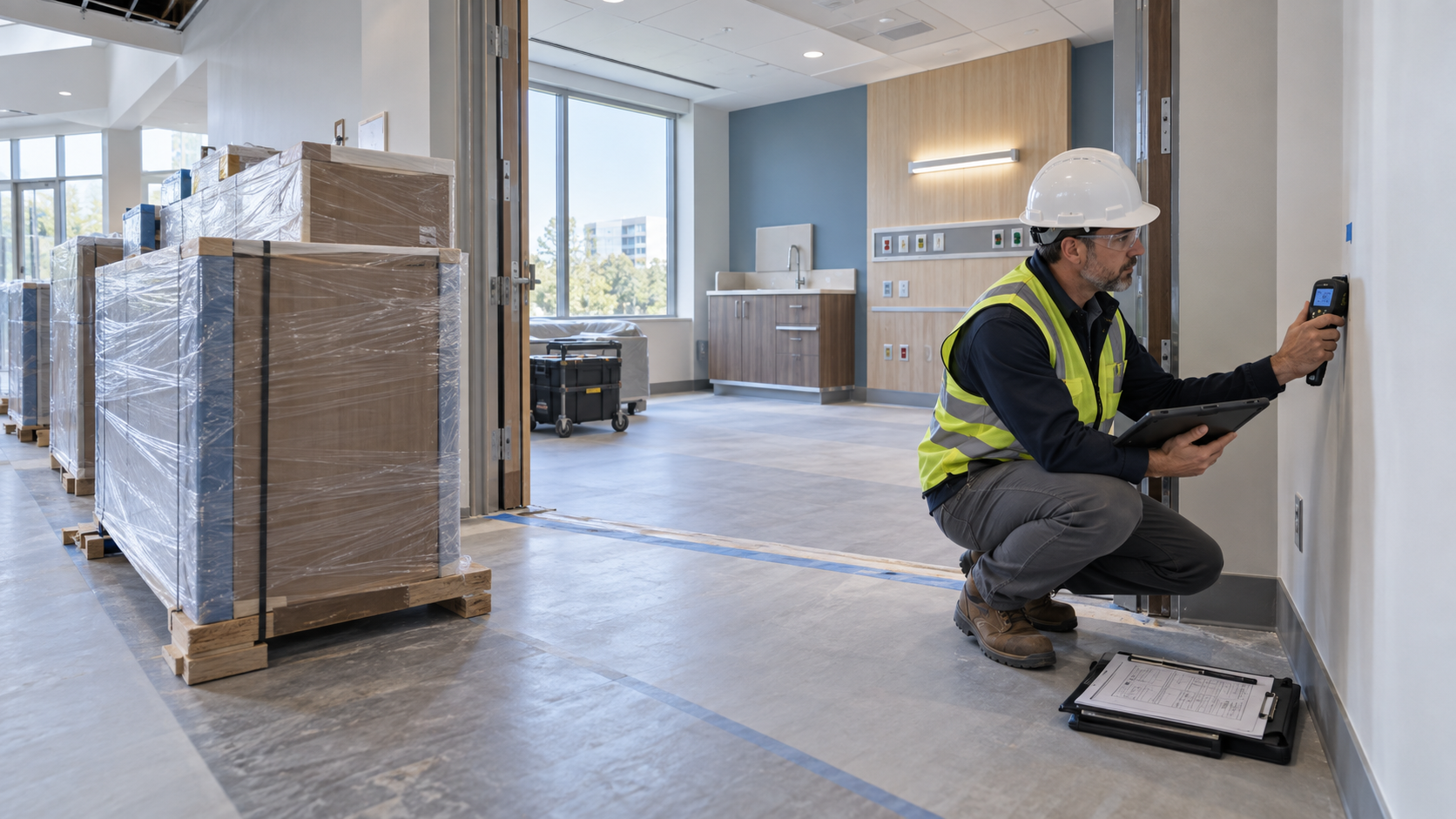
- The receiving area is enclosed, dry, clean, and suitable for the specified products.
- Required environmental conditions can be maintained through installation and afterward.
- Relevant field dimensions, substrates, backing, and utility locations are verified.
- Access, staging, protection, and trade sequencing are coordinated.
- Current drawings, required approvals, and unresolved interfaces are identified.
Release the areas that are actually ready.
A delayed building may still contain workable zones.
One floor, wing, or group of rooms might support productive installation while another remains unsuitable. A joint readiness walk can identify that distinction.
For each proposed zone, record its condition, photographs, relevant readings, missing prerequisites, responsible parties, and the next inspection date. Agree on how following trades will protect completed work.
Then connect the released area to a realistic installation sequence.
Sending a crew into scattered rooms without reliable access or a defined handover can turn a phased recovery plan into repeated disruption.
Put the recovery costs and decisions on the table.
The discussion should cover additional crews, overtime, split shipments, storage, protection, return visits, and the effect on other committed projects.
Document the proposed changes and obtain the required direction through the project’s agreed procedures. A written instruction alone does not correct an unsuitable physical condition.
The millworker also needs to report its own readiness honestly. If fabrication, staffing, or delivery is late, that belongs in the recovery discussion too.
Protect the finished result.
At COREFINISH GROUP, we believe recovery starts with a shared account of what is ready, what remains unresolved, and what each party can reliably deliver.
A credible plan may require revised sequencing, controlled releases, added resources, or an adjusted completion date.
When a project is three months behind, the next question should be: “Which areas can receive finished work successfully, and what must happen before the others can?”
Source materialArchitectural Woodwork Institute · AWI 200 · Care & Storage, Section 3.2 ↗
COREFINISH GROUP connects design intelligence, technical coordination, qualified makers, and field execution to protect exceptional interiors.
Begin a Private Consultation