CORE Journal
The Detail
Design intelligence.
Technical clarity.
Field notes on the decisions, documents, makers, materials, and management behind exceptional interiors.

Latest · Issue 35 · October 2026
Three Months Behind—and Now They Want the Millwork Installed
When a delayed project calls for millwork before the site is ready, recovery needs verified conditions, controlled area releases, realistic resources and documented decisions.
Read the latest article ↗CORE Laws & Monthly Archive · August 2024—Present
35 articles
Issue 35 · October 2026 · Schedule & Site ReadinessThree Months Behind—and Now They Want the Millwork InstalledWhen a delayed project calls for millwork before the site is ready, recovery needs verified conditions, controlled area releases, realistic resources and documented decisions.
Read article ↗ Issue 34 · October 2026 · Business & Project RiskWhen the Numbers Tell You Not to Take the Job
Short schedules, tight budgets, uncertain scope and payment timing can turn an attractive contract into a poor business decision. A practical review before committing.
Read article ↗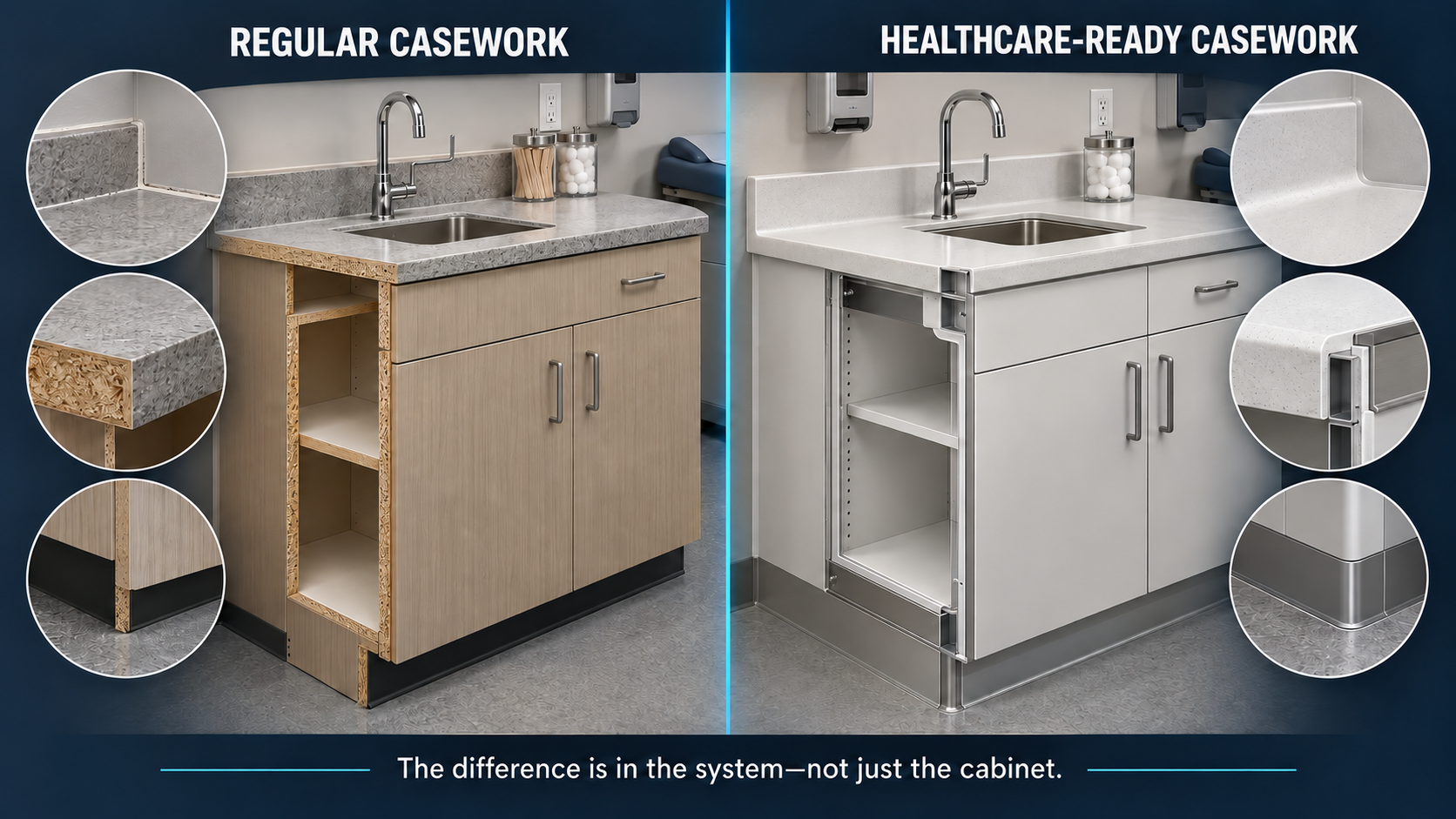 Issue 33 · September 2026 · Healthcare InteriorsWhy Many Millwork Companies Aren’t Healthcare-Ready
Healthcare millwork demands more than cabinetmaking: controlled documentation, specified materials, clinical coordination, disciplined logistics, and accountable closeout.
Read article ↗Issue 32 · September 2026 · Healthcare InteriorsHealthcare Casework Is Not a Cabinet OrderTreating medical casework as a purchase order separates the cabinets from the clinical, technical, and scheduling decisions that determine whether the rooms work.
Read article ↗ Issue 31 · September 2026 · Special ReportThe Millwork Shop You Hire Determines the Risk You Carry
A detailed comparison of small-shop delivery and the COREFINISH network: manufacturing resources, acoustic treatments, scope control, schedule slippage, and accountability.
Read article ↗ Issue 30 · September 2026 · Special ReportSPECIAL REPORT: Install it now. We’ll turn the air on later.
How schedule slippage drives premature millwork installation—and how general contractors can prevent moisture damage, rework, claims, and delayed occupancy with a controlled Interior Release Gate.
Read article ↗ Issue 29 · September 2026 · Project IntelligenceThe One: when ambition outruns project control.
The Bel-Air megamansion was conceived as a singular architectural achievement. Its bankruptcy sale shows what can happen when vision, financing, approvals, scope, and execution stop moving as one system.
Read article ↗ Issue 28 · August 2026 · Residential DesignThe new speakeasy is not a gimmick. It is a lifestyle room.
Private speakeasy-style lounges are moving into luxury residential buildings. The opportunity is a highly intentional room for hospitality, conversation, music, and belonging.
Read article ↗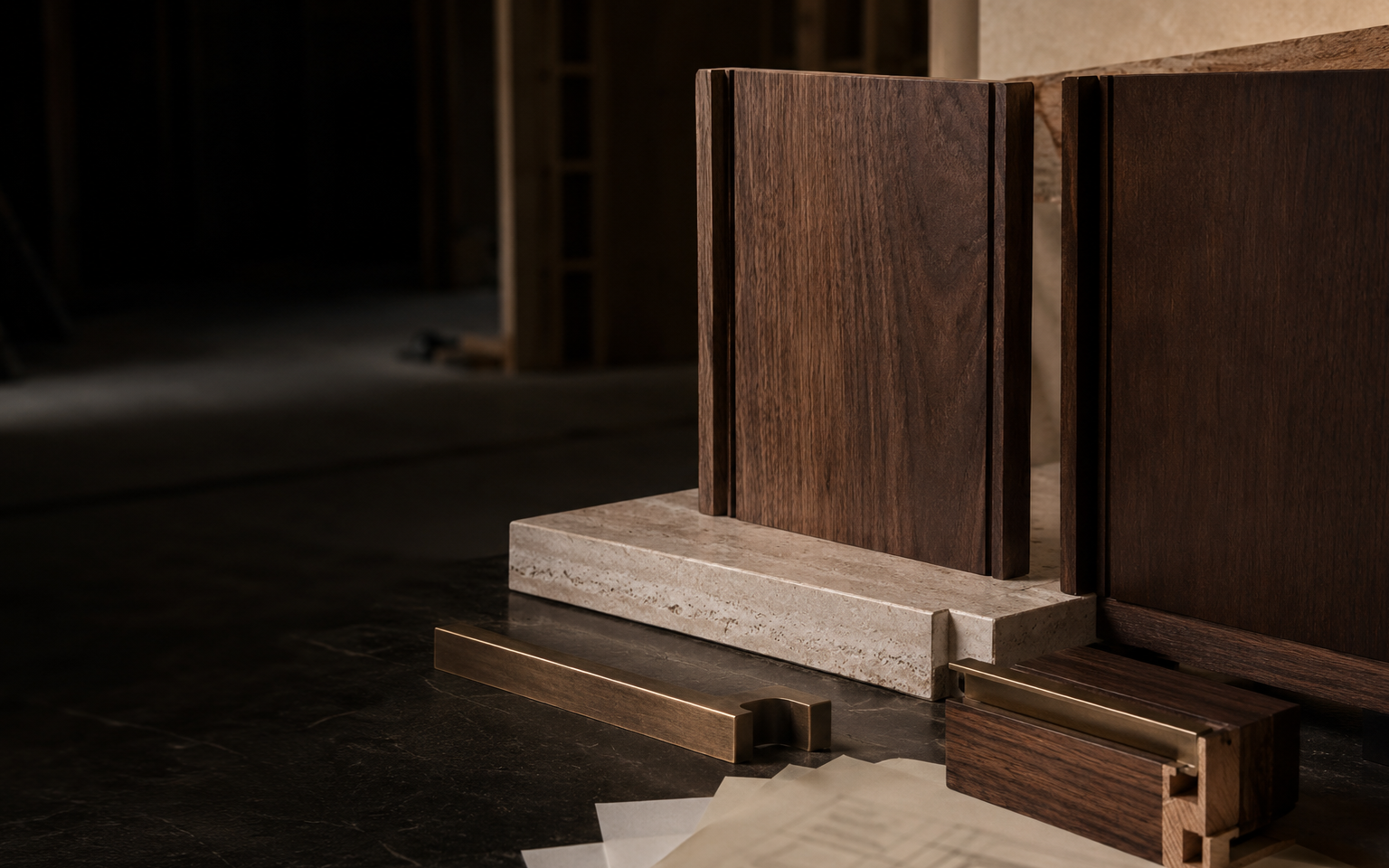 Law 27 · August 2026 · Project ControlEvery substitution redraws the room.
A substituted finish, fitting, appliance, or fabricator does not change one line item. It rewrites a connected set of design, scope, budget, production, and field obligations.
Read article ↗ Law 26 · August 2026 · StrategyControl the release, or surrender the outcome.
A fabrication release is not an administrative milestone. It is the moment assumptions become cost, material, schedule, and field consequence.
Read article ↗ Issue 25 · August 2026 · StrategyWhen should an execution partner enter the project?
The expensive answer is after trouble begins. The intelligent answer is before scope, budget, and responsibility fragment.
Read article ↗ Issue 24 · July 2026 · TechnicalShop drawings are where design gets protected—or lost.
Why the documents between design and fabrication carry more visual consequence than most owners ever see.
Read article ↗ Issue 23 · June 2026 · PerspectiveWhat is a Luxury Interior System?
The difference between decorating rooms and coordinating an interior as one technically connected experience.
Read article ↗ Issue 22 · May 2026 · Design & DeliveryWhy beautiful interiors fail during execution.
Where unclear scope, incomplete drawings, missed interfaces, and fragmented accountability compromise exceptional design.
Read article ↗ Issue 21 · April 2026 · PreconstructionThe room should be built on paper first.
Why preconstruction is the least expensive place to resolve the most expensive interior decisions.
Read article ↗ Issue 20 · March 2026 · BudgetBudget alignment is not value engineering.
A better way to reconcile ambition, scope, and cost before the design is reduced by emergency decisions.
Read article ↗ Issue 19 · February 2026 · MaterialsMaterial samples must answer technical questions.
A beautiful sample is only the beginning; performance, variation, fabrication, and maintenance determine whether it belongs in the project.
Read article ↗ Issue 18 · January 2026 · MillworkReveals are small dimensions with large consequences.
How shadow lines, margins, and alignments create calm—or expose every coordination failure.
Read article ↗ Issue 17 · December 2025 · ProcurementLong-lead items are design decisions with clocks attached.
Why procurement dates must be connected to selections, approvals, fabrication, and field readiness.
Read article ↗ Issue 16 · November 2025 · Vendor StrategyThe lowest millwork bid may be the most expensive choice.
Price is only one measure of whether a fabricator can carry the quality, information, and schedule demanded by the project.
Read article ↗ Issue 15 · October 2025 · AppliancesAppliance coordination begins before the cabinet drawings.
Model numbers, utilities, clearances, ventilation, and service access must be confirmed before millwork is released.
Read article ↗ Issue 14 · September 2025 · LightingIntegrated lighting is a millwork detail, not an accessory.
Channels, drivers, color temperature, wiring, diffusion, access, and dimming must be resolved as part of the assembly.
Read article ↗ Issue 13 · August 2025 · Field ConditionsField dimensions are a managed event.
Measuring is not a last-minute site visit; it requires readiness criteria, responsibility, documentation, and release decisions.
Read article ↗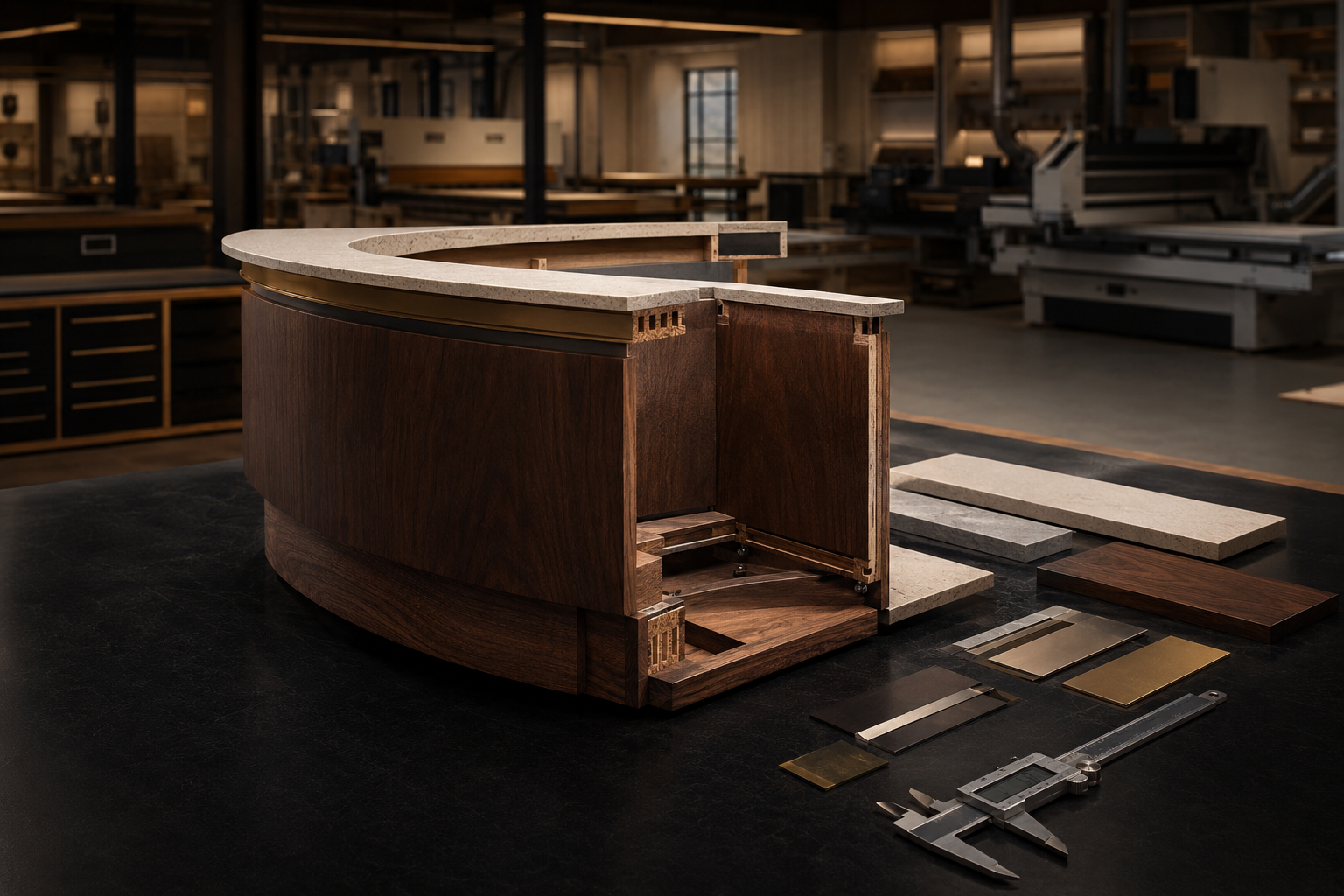 Issue 12 · July 2025 · FabricationFabrication monitoring should happen before completion.
Milestone reviews reveal material, engineering, finish, and schedule problems while correction is still practical.
Read article ↗ Issue 11 · June 2025 · DeliveryDelivery planning is part of installation quality.
Access, sequence, protection, staging, labeling, and site readiness determine whether finished work reaches the room intact.
Read article ↗ Issue 10 · May 2025 · InstallationInstallation is the final act of fabrication.
The installer does not merely place cabinets; the field team completes the geometry, interfaces, function, and presentation.
Read article ↗ Issue 09 · April 2025 · Quality ControlA punch list should not become a design review.
Closeout is for verifying completed work—not discovering unresolved scope, missing decisions, or systemic defects.
Read article ↗ Issue 08 · March 2025 · Project RescueProject rescue begins with an honest diagnosis.
Before adding labor or demanding acceleration, identify whether the real failure is information, capacity, money, material, or management.
Read article ↗ Issue 07 · February 2025 · Owner RepresentationThe owner needs one complete view of the interior.
Trade contracts divide responsibility; owner representation reconnects decisions around the intended result.
Read article ↗ Issue 06 · January 2025 · CollaborationArchitect, designer, builder, and execution partner: who owns what?
Clear roles strengthen collaboration and prevent important interfaces from falling between professional scopes.
Read article ↗ Issue 05 · December 2024 · Commercial InteriorsCommercial millwork succeeds through repetition with control.
Prototype review, room standards, logistics, and documented tolerances turn repeated assemblies into consistent environments.
Read article ↗ Issue 04 · November 2024 · ResidentialA luxury residence needs one material language.
Continuity in wood, stone, metal, proportion, and light allows distinct rooms to belong to one complete home.
Read article ↗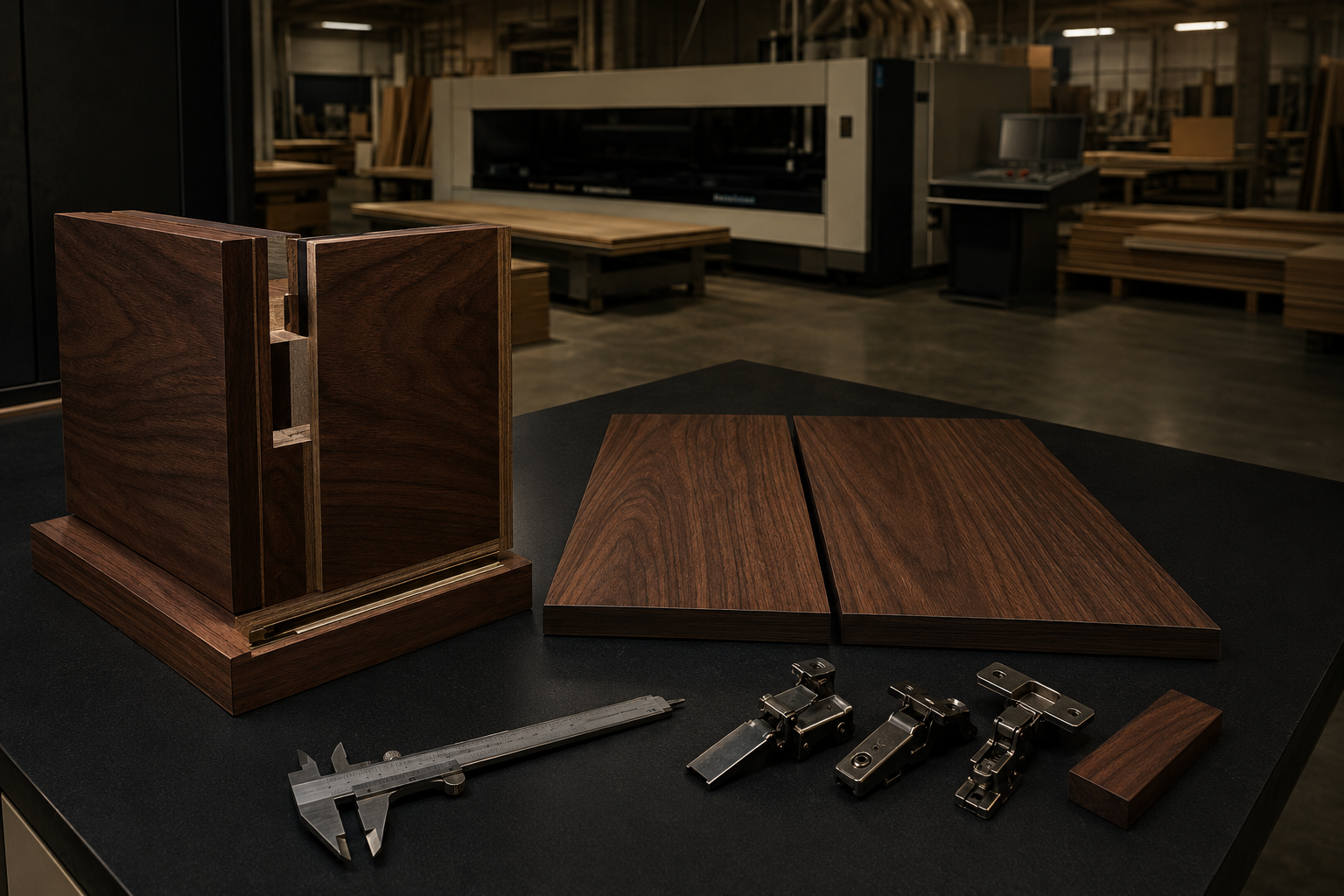 Issue 03 · October 2024 · TechnologyCabinetry software does not replace cabinetry judgment.
Digital tools create speed and precision only when construction knowledge, design awareness, and field reality guide the model.
Read article ↗ Issue 02 · September 2024 · ScopeScope gaps are created in the spaces between trades.
The most disruptive omissions are often not individual products but transitions, supports, access, preparation, and responsibility.
Read article ↗ Issue 01 · August 2024 · PerspectiveExecution is part of the design.
The inaugural argument for treating engineering, procurement, fabrication, and installation as extensions of creative intent.
Read article ↗Private Dispatch
Subscribe to
The Detail.
Occasional essays on design, cabinetry, architectural millwork, project risk, and the decisions that protect exceptional interiors.
The Detail is written for owners, designers, architects, builders, and makers who believe exceptional interiors should be as disciplined in execution as they are ambitious in design.